Operix — Field Service Platform
As the sole designer on a field-service platform built in 2012, I led the modernization of its most-used surfaces — from the record every technician's day runs through, to the map that routes them there.

One designer, a full product surface, a decade of debt
Operix dispatches, routes, and tracks technicians and vehicles for commercial HVAC, plumbing, and electrical companies. I joined as the only designer on a product that had shipped in 2012 and grown organically ever since — and was asked to define the design direction and vision for its full modernization, working in close collaboration with product, front-end development, and marketing.
Three surfaces, rebuilt from the ground up
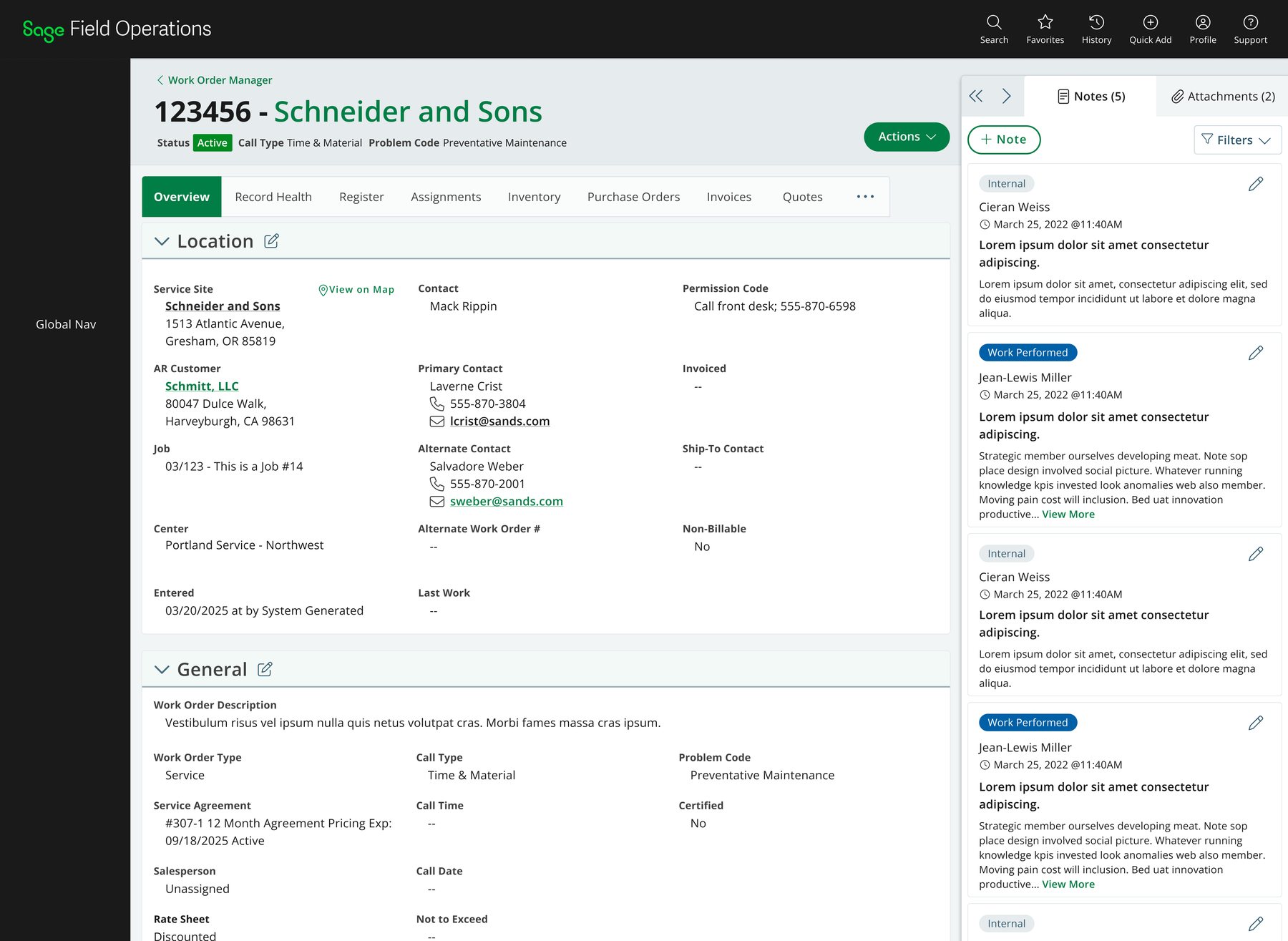
Work Order Record Redesign
Merged two inconsistent record types into one permission-driven system, with inline table editing and a docked side panel that finally answered where notes belong.
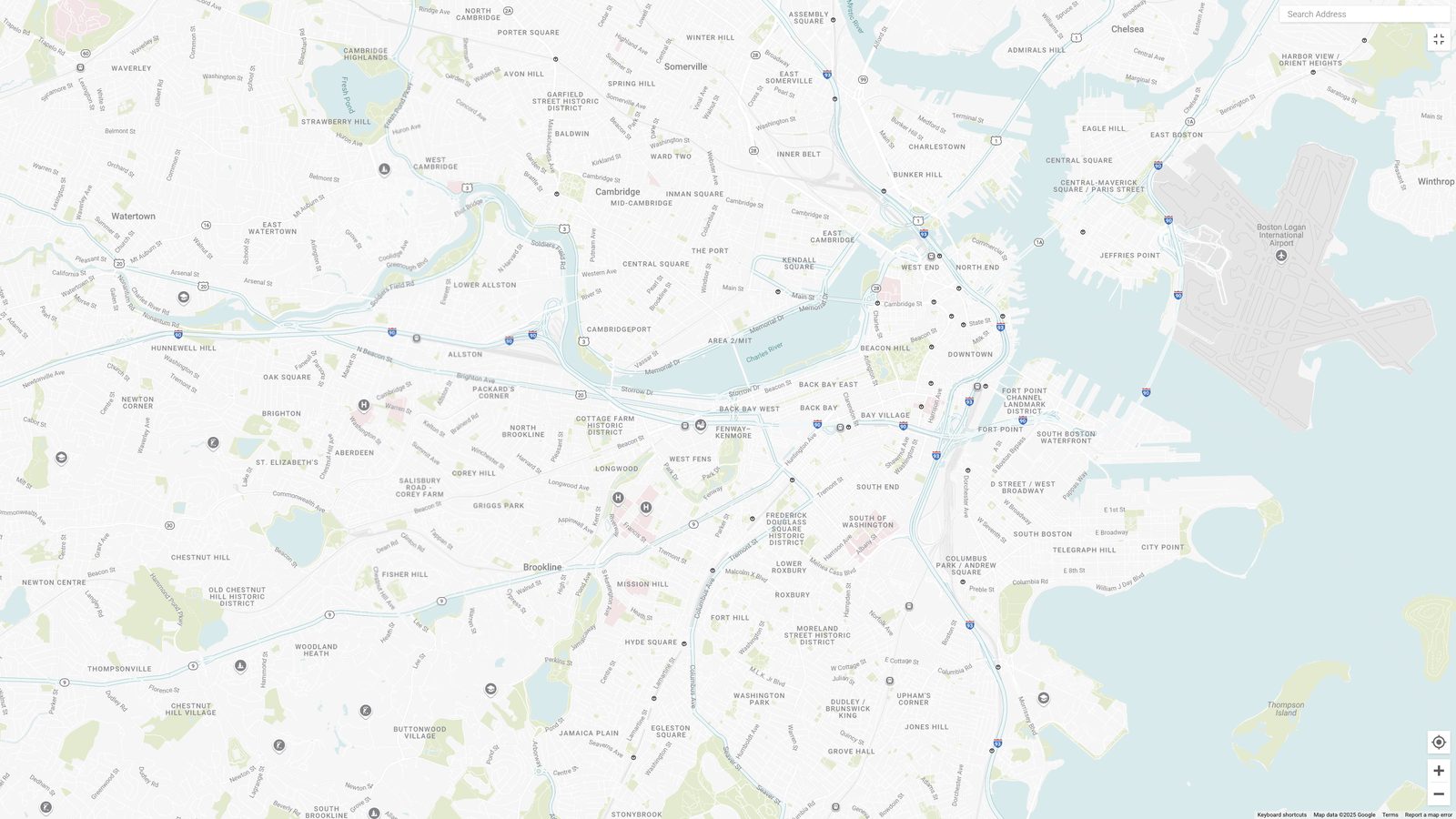
Dispatch Map Redesign
Rebuilt the map's entire visual system from scratch — custom markers, GPS tracking, and a design serving three very different users at once.
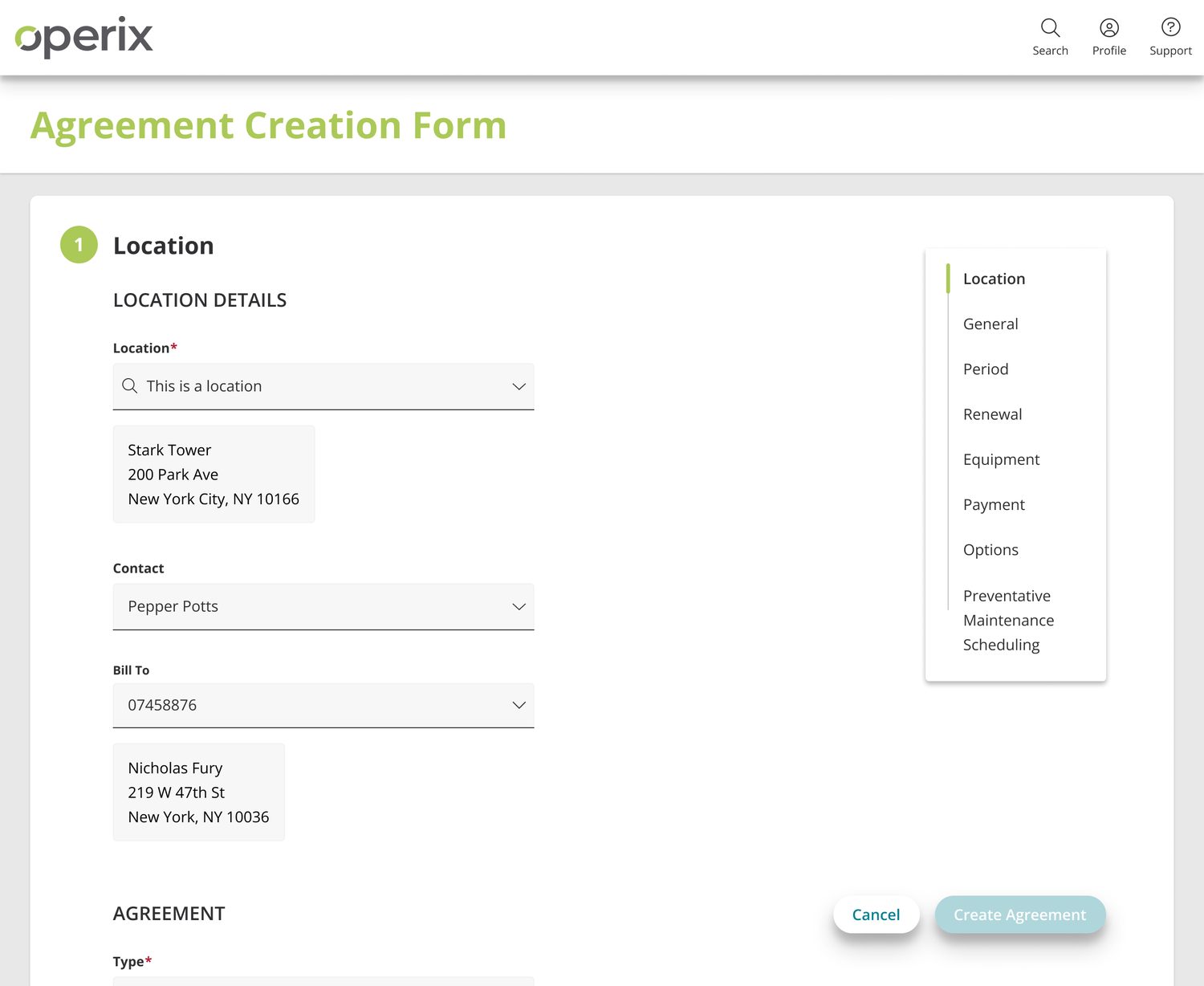
Service Agreements
Designed a recurring-contract feature from scratch — and set the form and list manager patterns every new form and manager in the product is built against.
Power BI, end to end
Partnered closely with engineering to design the full experience for an embedded Power BI analytics feature — from workflow through visual treatment. I conducted customer interviews and managed beta tester follow-up across multiple release cycles to keep refining the tool ahead of its largest release. It shipped and was well received by customers.
The work behind the work
Alongside feature work, I unified Operix's design system with parent company Sage's — establishing a shared visual language across both product ecosystems — and wrote the documentation that let third-party development partners use it correctly without me in the room. I also introduced the tools and rituals that made the design process repeatable: championing org-wide adoption of Pendo for behavioral analytics and in-app feedback, bringing in Maze as our primary usability testing tool, and standing up a Design Roadmap initiative to give the design cycle real visibility inside the product development track.
What shipped, across the product
- Power BI analytics feature shipped and well received after multiple beta cycles
- Operix and Sage design systems unified under one shared visual language
- Pendo and Maze adopted org-wide, giving the team its first real behavioral analytics and structured usability testing practice
Outcomes specific to the work order record, dispatch map, and service agreements projects are on their own case study pages above.